🤖
A close-up portrait of the subject captured from a three-quarter profile view
Ai prompt
Browse More
Post & Share
Share to social channels or copy ready-to-post content
A close-up portrait of the subject captured from a three-quarter profile view
AI Prompts
Vault
Unlocked
Created by Teres UEden
Share to Social Platforms
Click to post
Copy & Export Tools
Instant clipboard
Powered by XAIP Universe
Replace the subject’s identity entirely with the uploaded reference photo
Before & After Preview
After Using Prompt
Download Previews
Watermarked by XAIP Universe
Created by
Verified Creator
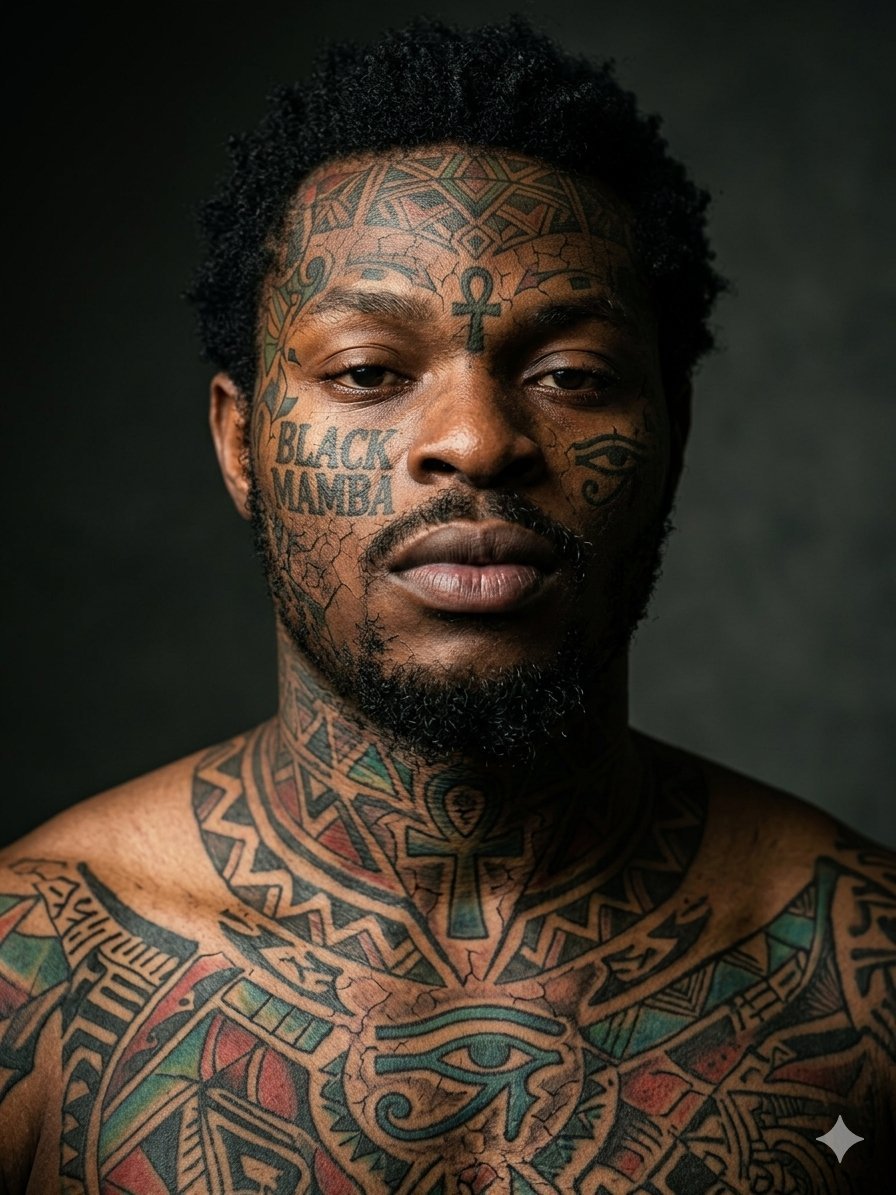
1. SUBJECT & POSE A close-up portrait of the subject captured from a three-quarter profile view, looking slightly off-camera with a calm, neutral expression. The subject has short, natural coiled hair and a neatly groomed, short beard.
2. CLOTHING & STYLING The subject is shirtless, focusing entirely on the skin. The face, neck, and upper chest are covered in dense, intricate, multi-colored tattoo work. The tattoos feature a complex mix of geometric patterns, tribal motifs, and symbolic icons including ankhs and an Eye of Horus. The text "BLACK MAMBA" is prominently featured on the cheek in a bold, weathered font. The tattoos have a distinct "crazed" or cracked texture, as if integrated into the skin like ancient pottery or aged parchment.
3. ENVIRONMENT & SCENE A dark, moody studio setting with a textured, mottled background in earthy sepia and brown tones. The focus is tightly locked on the subject with a shallow depth of field.
4. LIGHTING Dramatic, high-contrast directional lighting (Rembrandt style). A strong key light from the side emphasizes the physical texture of the skin, the depth of the tattoo ink, and the natural contours of the face, leaving the opposite side in soft, cinematic shadow.
5. CAMERA & TECHNICALS Captured with a professional DSLR, 85mm prime lens, f/2.8 aperture. High-resolution detail showing individual pores, hair follicles, and the micro-textures of the skin and tattoos. No artificial smoothing.
6. MOOD & REALISM Documentary-style realism with an artistic, cultural depth. The image feels unretouched and raw, prioritizing authentic skin texture and the physical presence of the subject.
7. CONSTRAINTS Photorealistic, non-AI look. No beautification, no skin smoothing, no face reshaping. Natural skin imperfections and asymmetry must be preserved.
IDENTITY INSTRUCTION: Replace the subject’s identity entirely with the uploaded reference photo. Preserve the reference face exactly as-is — including natural proportions, asymmetry, and skin texture. Do not beautify, smooth, idealize, or modify facial features. Identity accuracy is more important than style.
8,420
0
Similar Items
Browse MoreCommunity Results
See what others achieved using this item
No Results Yet
Be the first to share your results! Unlock this item and post what you achieved.
Discussion
Ask questions or share your thoughts
Sign in to join the discussion
No Comments Yet
Be the first to start the discussion!
Endless Discoveries
Looking for More AI Secrets & Prompts?
Explore hundreds of exclusive creator prompts, secret tools, and workflows in our phone photo gallery.